Mental health providers in Minnesota deem telemedicine convenient and beneficial
The pandemic has accelerated the use of remote healthcare access — telemedicine. This has been due to a couple of factors. First, before the coronavirus, licensing, and other requirements made telemedicine less viable. Additionally, there was little need for patients and doctors to connect remotely.
With COVID-19, the need for social distancing made remote healthcare visits necessary. Licensing changes made during this period also allowed people to access health care remotely. Governor Walz, for instance, waived licensing requirements in Minnesota so that out-of-state mental health providers could assist Minnesotan residents. Since then, mental health providers in Minnesota have embraced telemedicine, deeming it very beneficial and convenient. Some plan to use it even after the pandemic is over.
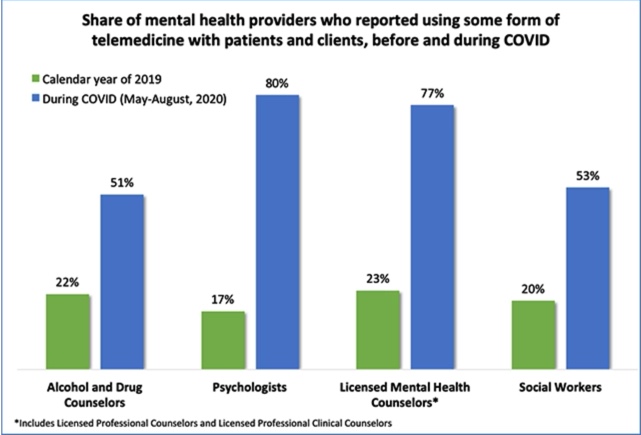
Source: Minnesota Department of Health
A lot of patients and providers like the convenience of telemedicine
A lot of patients and doctors are touting the benefits of remote connection, as reported by MinnPost,
Richard Sethre, Psy.D., retired from his longtime psychology practice this spring. As he was nearing retirement, he made the decision to transition most of his practice to telemedicine. An early adopter to technology, he saw the benefits of virtual counseling sessions, and most of his patients, after initially expressing concern that telehealth could limit the therapeutic relationship, got on board with the change.
“At first, several of my patients commented, ‘This is really different,’” Sethre said. “Later, they also commented in effect, ‘Gee, this is going great. I love the convenience. I want to keep doing this.’ They reported very little negative difference between in-person treatment and telehealth.”
The majority of providers intend to use telemedicine after covid is over
Teri Fritsma, a Senior Research Analyst at the Minnesota Department of Health Office of Rural Health and Primary Care, and her colleagues polled licensed mental healthcare providers to find out how many would continue to use telemedicine after COVID-19 is over. The findings reveal that telemedicine might remain a permanent part of mental health care providers in Minnesota.
“Of the providers that are using telemedicine right now, a huge majority of them told us they plan to continue using telemedicine after the pandemic ends,” she said. “Most believe that it is here to stay.”
When asked if they intend to continue offering at least some services via telemedicine post-COVID, the majority of the state’s mental health providers — 75 percent of licensed alcohol and drug counselors, 85 percent of psychologists, 88 percent of mental health counselors and 79 percent of social workers — said they would. Once they had a taste of the convenience and options that telehealth offers, it appears hard to look back.
Telemedicine could improve access to care
While it has taken a pandemic for the state to make the necessary changes to enable telemedicine, this change should be celebrated, for it could improve access to care, by making it easier for providers to reach patients, thereby, expanding the pool of providers available.
Fritsma compared the experience of offering telemedicine to her own work-from-home life during the pandemic: “Think about how easy it is in so many ways to not go into the office. The telehealth option encourages all sorts of providers to be able to offer care who might otherwise have to be out of the market, like new moms or people who are getting ready to retire but would like to continue to work full time.”
And with telehealth now established as a viable option, many providers who might have been considering retirement before may now be rethinking their futures. “This could allow people to keep a foot in the door and reach potential patients more broadly, too,” Fritsma said.
As we advance, it is up to lawmakers to make any regulatory changes made during the emergency period that have allowed the extensive adoption of telemedicine permanent. The state should, additionally, roll back other existing rules hindering more widespread use of telemedicine. This will enable more people to access the benefits of telemedicine.