In 2018, Minnesota ranked fifth highest in the U.S for cigarette smuggling
Earlier today, the Tax Foundation published a report on the effect of high excise taxes on tobacco smuggling. According to the report findings:
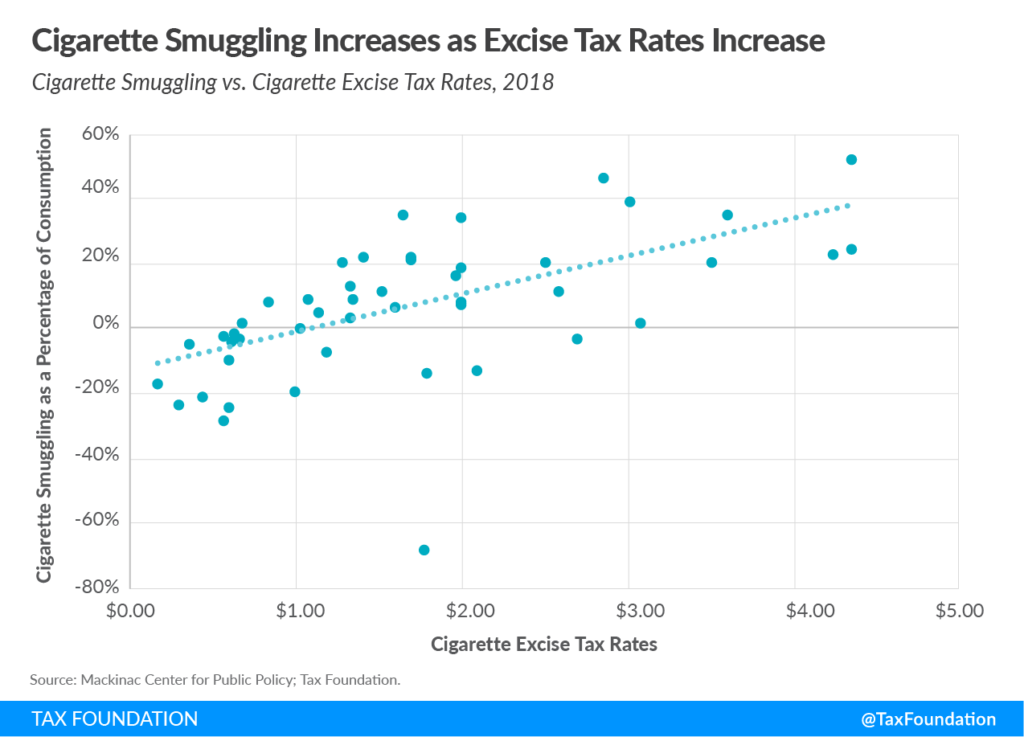
Excessive tax rates on cigarettes in some states induce substantial black and gray market movement of tobacco products into high-tax states from low-tax states or foreign sources.
That is, tax differences among states encourage people to buy cigarettes in low-tax states. These cigarettes are then often smuggled into high-tax states for sale.
As evidenced by the data,
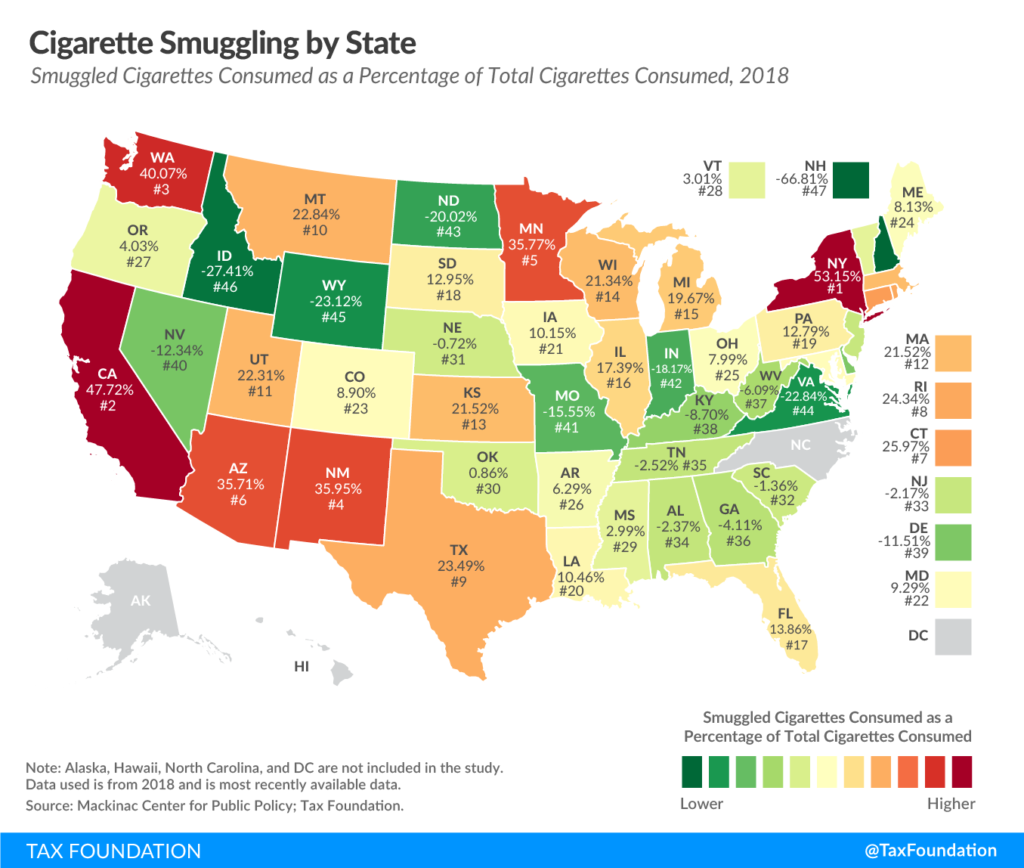
New York has the highest inbound smuggling activity, with an estimated 53.2 percent of cigarettes consumed in the state deriving from smuggled sources in 2018. New York is followed by California (47.7 percent of consumption smuggled), Washington (40.1 percent), New Mexico (36 percent), and Minnesota (35.8 percent).
New Hampshire has the highest level of outbound smuggling at 66.8 percent of consumption, likely due to its relatively low tax rates and proximity to high-tax states in the northeastern United States. Following New Hampshire is Idaho (27.4 percent outbound smuggling), Wyoming (23.1 percent), Virginia (22.8 percent), and North Dakota (20 percent).
Rhode Island, following a cigarette tax increase from $3.75 to $4.25 in the Summer of 2017, has seen a significant increase in smuggling into the state, moving it from a ranking of 18th to 8th highest inflow of cigarettes in the U.S.
How Minnesota compares
In 2018, 35.7 percent of all cigarettes sold in Minnesota were smuggled from other states. Minnesota ranked fifth highest among the 50 states for smuggling.
Not surprisingly, Minnesota also had the fifth-highest cigarette excise tax in the country in 2018. Cigarette Smuggling has increased by 52 percent between 2006 and 2018 as the cigarette excise tax has grown by 142 percent during the same period.
It’s the incentives, stupid
Initially intended as a smoking deterrence, Minnesota’s cigarette excise tax hikes have also unintentionally increased smuggling. But this shouldn’t be too surprising. After all, all of Minnesota’s neighboring states have lower taxes. It stands to reason that people would make a profit by buying cigarettes in Wisconsin or North Dakota to sell in Minnesota on the black market.
In short, incentives matter.
Making something more costly discourages people from doing it. In other instances, people find a way around those high prices. Smokers in Minnesota are doing both by buying fewer cigarettes from Minnesota businesses and looking at cheaper out-of-state options.