No evidence supports extending restrictions on businesses in Minnesota
Risk is all around us. Virtually any activity we undertake, whether driving or cooking, presents some form of risk that cannot be eliminated. Risk can be managed, however, through some safety measures or government regulations. Failing that, individuals can insure themselves against uncertain outcomes or damage incurred through risky behaviors. Car insurance is a good example.
Since it cannot be fully eliminated, the amount of resources individuals and the government invest in managing risk matters. Regulation intended to reduce risk, if too burdensome, for instance, can hamstring individuals and businesses without providing extra protection. Lawmakers, therefore, must ensure a balance of costs and benefits.
Two particularly important questions must be asked, therefore, when designing legislation intended to protect against risk. As summarized by researchers Susan Dudley and Jerry Brito, these questions are:
“To what extent does the regulation reduce risks?” and “At what costs?”
As Minnesota continues its fight against COVID-19, it’s worth asking whether the continued extensions of Governor Walz’s executive orders justify their perceived benefits.
Lockdown policies: A mismatch of costs and benefits
The beginning of the pandemic was rife with unknowns. For one, the virus was a novel idea. Research on possible health effects and risk of transmission, among other things, was scarce. Shutting down society thereby provided a reasonable solution to ensuring that health systems were not overwhelmed, if the pandemic turned out to be catastrophic.
That has changed. As a society, we are more aware of who is most at risk from infection, sickness, and possibly dying from COVID-19. At the same time, we are also aware of who bears the costs of shutdowns. These two groups are not synonymous with each other.
When it comes to businesses, for instance, the U. S restaurant industry has taken a huge toll due to lockdown and social distancing orders. To date, over a hundred thousand restaurants have closed, and the restaurant industry has suffered massive revenue and job losses. Yet have been responsible for a very low rate of transmission and spread. As my colleague, John Phelan, illustrated, in Minnesota, restaurants and bars were responsible for merely 1.7 percent of cases.
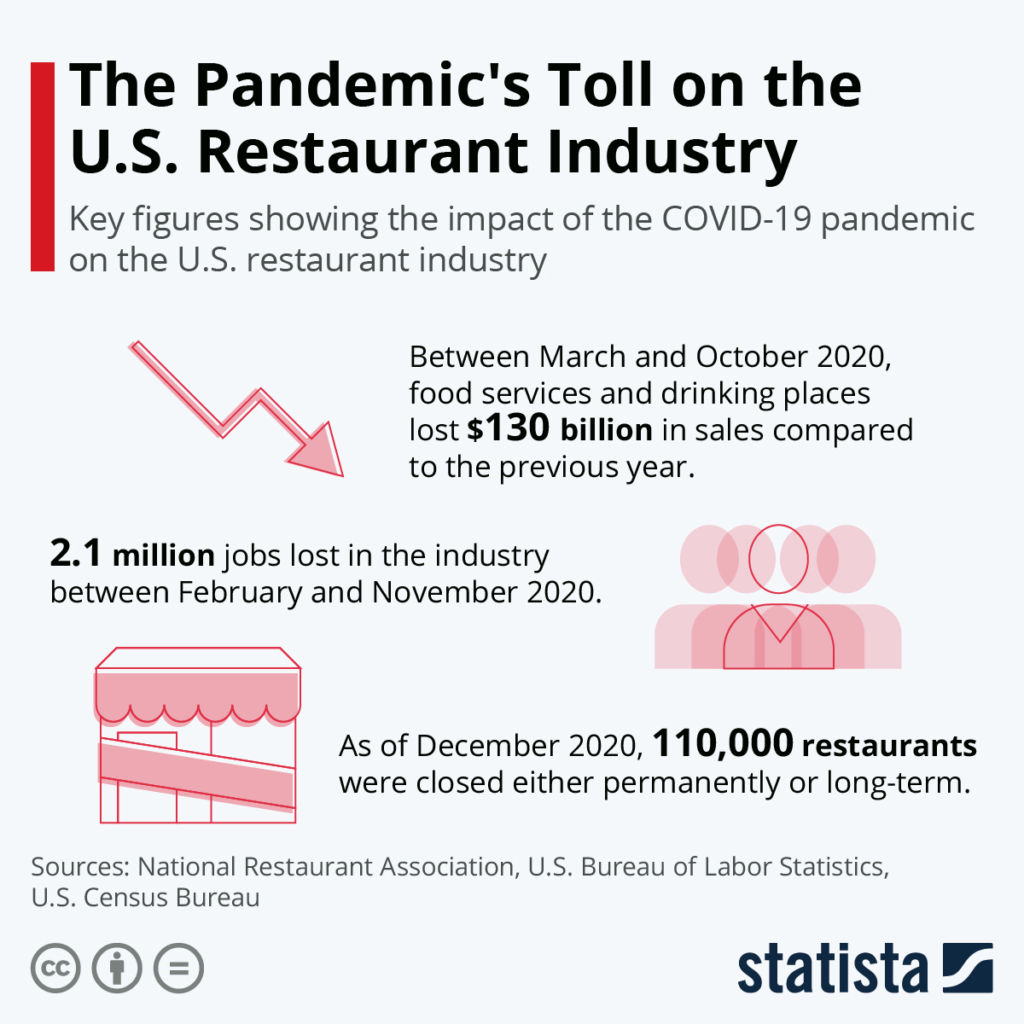
The same can be said for other stakeholders. School children, for instance, are at little risk of contracting and transmitting the virus. However, prolonged lockdowns place them at a great risk of deteriorating mental health. Children have also suffered massive learning losses that could translate to low lifetime earnings.
Yet despite the massive costs imposed on otherwise low-risk individuals, lockdown orders have not improved outcomes for high-risk individuals either. The elderly and residents of long-term care facilities have fared relatively better in Wisconsin compared to Minnesota, which has had one of the strictest lockdown policies in the Midwest.
To extend or not extend lockdowns?
So, are Walz’s lockdown policies worth the costs? Far from it.
Walz’s lockdown policies not only do not balance costs and benefits, but also impose disproportionately large costs, particularly on businesses and young people, to subsidize small, localized, and potentially non-existent benefits among high-risk individuals.
To keep it short, no evidence supports extending one-size-fits-all lockdown policies in Minnesota.