How Americans moved in 2020
Numerous factors affect economic outcomes, and migration is one of those factors. Periods of inbound migration, for instance, can be associated with growth in output due to the increased availability of workers.
On the other hand, accelerated outbound migration will reduce the pool of human capital, possibly contributing to a decline in output. Migration patterns also affect other economic factors like tax revenues.
In addition to impacting economic outcomes, migration patterns can also signal the relative attractiveness of a region. While people have different motivations for moving, generally, people tend to move towards areas that are more economically and socially viable. This is why regions that are associated with more favorable economic conditions tend to gain more people than they lose.
So, how did Americans move in 2020?
2020 Migration patterns
On January 4th, United Van Lines released their Annual Migration Study for 2020.
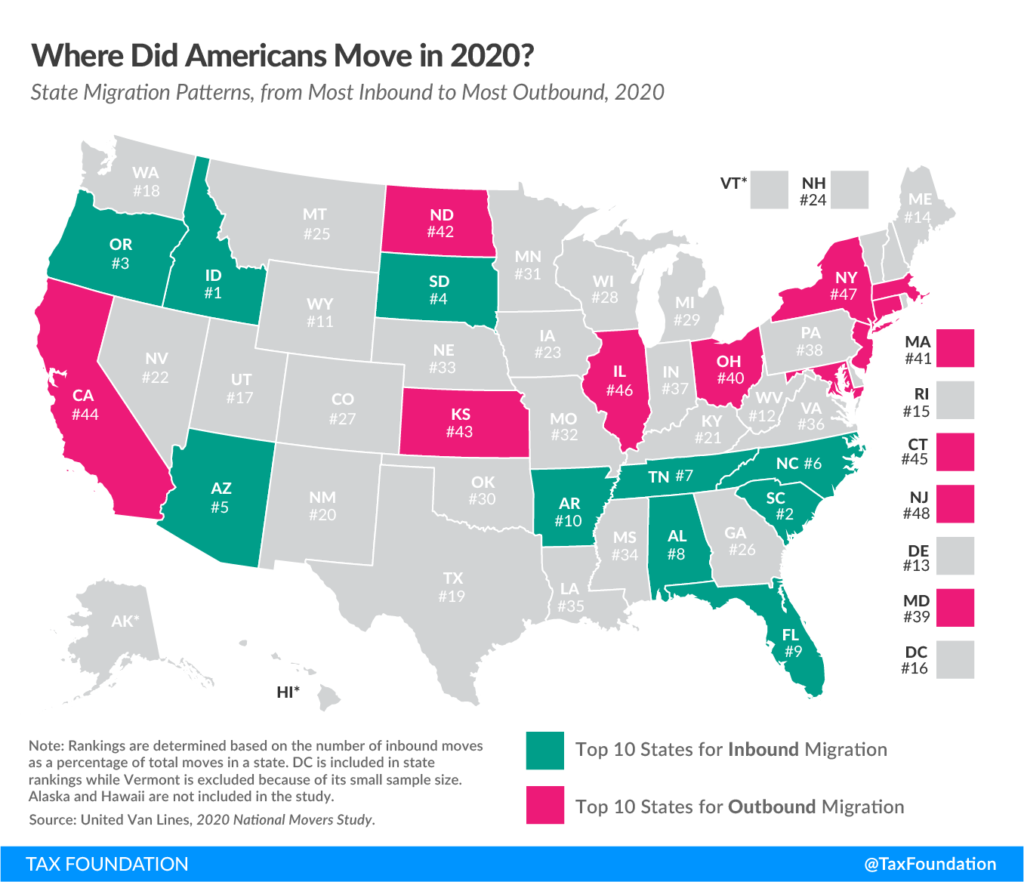
According to the new study, in 2020, migration patterns remained the same among the states, with Americans moving Southbound and westbound. In other words, Americans mainly moved from high-tax states to low-tax states.
Among the individual states, (1) Idaho (2) South Carolina, (3) Oregon (4) South Dakota, and (5) Arizona gained the most people. New Jersey, New York, Illinois, Connecticut, and California, however, were the top 5 losers.
Source: The Tax Foundation
Taxes affect migration
While the survey does not ask about taxes, migration patterns show that Americans mainly moved from high-tax states to low-tax states.
According to an analysis done by the Tax Foundation, among the 10 states that were chosen as desirable by retirement movers, 9 either have no social security taxes, exempt a large sum of it, or have no income tax at all.
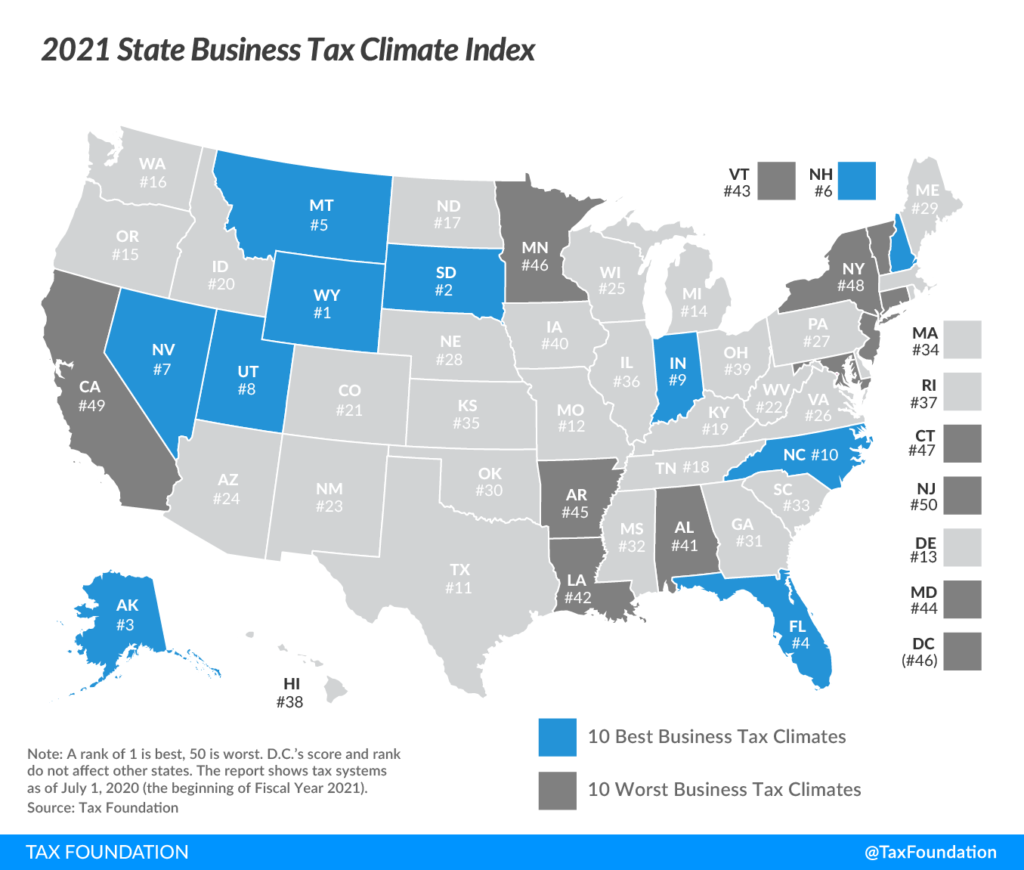
Furthermore, based on the Tax Foundation’s ranking of State Business Tax Climate,
Four of the 10 worst-performing states on this year’s Index are also among the 10 states with the most outbound migration in this year’s National Movers Study (New Jersey, New York, Connecticut, and California).
Seven of the top 10 ranked inbound migration states also rank in the top half of states on the Index, which measures tax structure. And the three which do not (Alabama, Arkansas, and South Carolina), while having significant room for improvement in the structure of their tax codes, generally feature low tax burdens.
Conversely, all but one of the top outbound states rank in the bottom third of the Index, the only exception being North Dakota (17th), where outbound migration has been driven by a decline in energy markets.
Source: The Tax Foundation
Minnesota
In 2020, Minnesota lost more people than it gained. According to the survey, Minnesota experienced the highest net outbound migration among individuals whose main reason for moving was either retirement or seeking a job. This should be concerning for the future viability of Minnesota’s economy.