Minnesota should take note from Arizona’s health care reform
In many ways, Arizona has been a pioneer in healthcare licensing reform.
In April 2019, for instance, Arizona became the first state to sign a law universally recognizing out-of-state licenses. This, in part, helped health care practitioners licensed in other states to establish practices in Arizona. Additionally, during the coronavirus crisis, Arizona was among the first states to suspend licensing requirements for health care providers.
According to Cato, Arizona is poised to be the first to make COVID-19-induced licensing changes permanent after the pandemic is over.
Absorbing lessons learned from the COVID-19 pandemic, Arizona Governor Doug Ducey plans for Arizona to once again lead the way in health care reform, this time by seeking legislation to make permanent his emergency executive order that allows Arizona residents to obtain telehealth services from practitioners licensed in any of the 50 states and the District of Columbia. While many states have taken similar emergency steps to improve access to health care during this public health crisis, unless their legislatures act, the emergency orders will expire when the crisis is over. If Governor Ducey convinces Arizona legislators, Arizona will become the first state in the union to permanently allow out‐of‐state licensed health care practitioners to render telehealth services to its residents.
The Governor’s 2021 Policy Priorities reported that many Arizonans—particularly those in rural areas—benefited greatly from the emergency telehealth action, with behavioral health services among those most utilizing the remote technology.
Minnesota legislators should take note
The COVID-19 virus has accelerated the use of remote healthcare access for a number of reasons.
First, the need for isolation drove the demand for remote connection between providers and patients. Additionally, licensing changes made during the emergency period made telehealth/telemedicine more viable compared to the past.
Most states, including Minnesota, suspended licensing requirements to allow residents to receive health care services from out-of-state providers not currently licensed in their state. In Minnesota, mental health care providers have been the largest users of remote services.
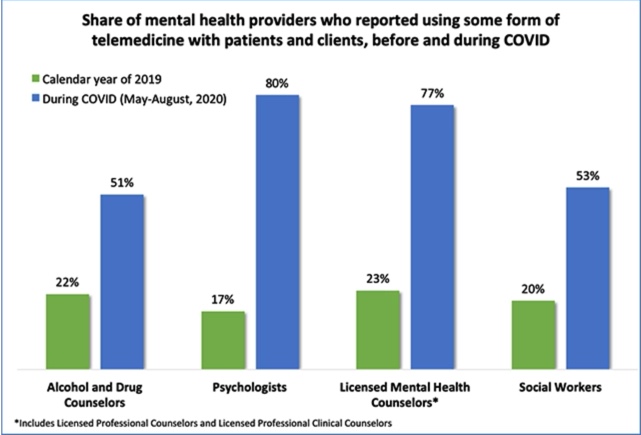
Source: Minnesota Department of Health
Despite the decline from its early peak, telemedicine/telehealth continues to be a viable option. Mental health care providers have touted it as a possible solution to the shortages facing Minnesota. Most providers that utilize telehealth/telemedicine see it as a permanent fixture in the way they provide services.
But as I have argued before, for the use of remote services to continue, it will require a more friendly regulatory environment. That includes, among other things, making the licensing changes made during the pandemic permanent.
In this regard, Arizona has provided a good example of what to do after COVID-19 is over. Besides, if these laws can be suspended due to COVID-19, why are they necessary in normal times?