Minnesota child care costs could rise 13% with a $15 minimum wage
Businesses respond to minimum wage hikes in a number of ways. When the costs of labor rise, businesses could lay off workers or reduce their hours. Some reduce fringe benefits. But others respond by raising prices, passing those higher costs onto consumers. This is especially common in labor-intensive industries, such as childcare.
One study, for instance, found that McDonald’s passed through to customers 100 percent of its wage increase after a minimum wage hike. This essentially translates to unchanged real wages for workers after accounting for inflation.
As discussions surrounding a $15 minimum wage continue in Minnesota, it is worth clarifying how destructive this policy will be, especially for the childcare industry.
Minnesota child care costs will be significantly affected
Child care workers are generally among some the lowest-paid workers in the nation. The Center for the Study of Childcare Employment estimates that, on average, child care workers are paid $12.12 an hour. This makes a $15 minimum wage binding in the child care industry.
Since childcare is labor-intensive, daycare centers have only one realistic avenue of dealing with high labor costs — pass them on to parents.
So, how much would childcare costs change due to a $15 minimum wage?
A new study by The Heritage Foundation has estimated that in Minnesota, child care costs would increase by 13 percent if the minimum wage went up to $15. Nationally, costs would increase by 21 percent on average.
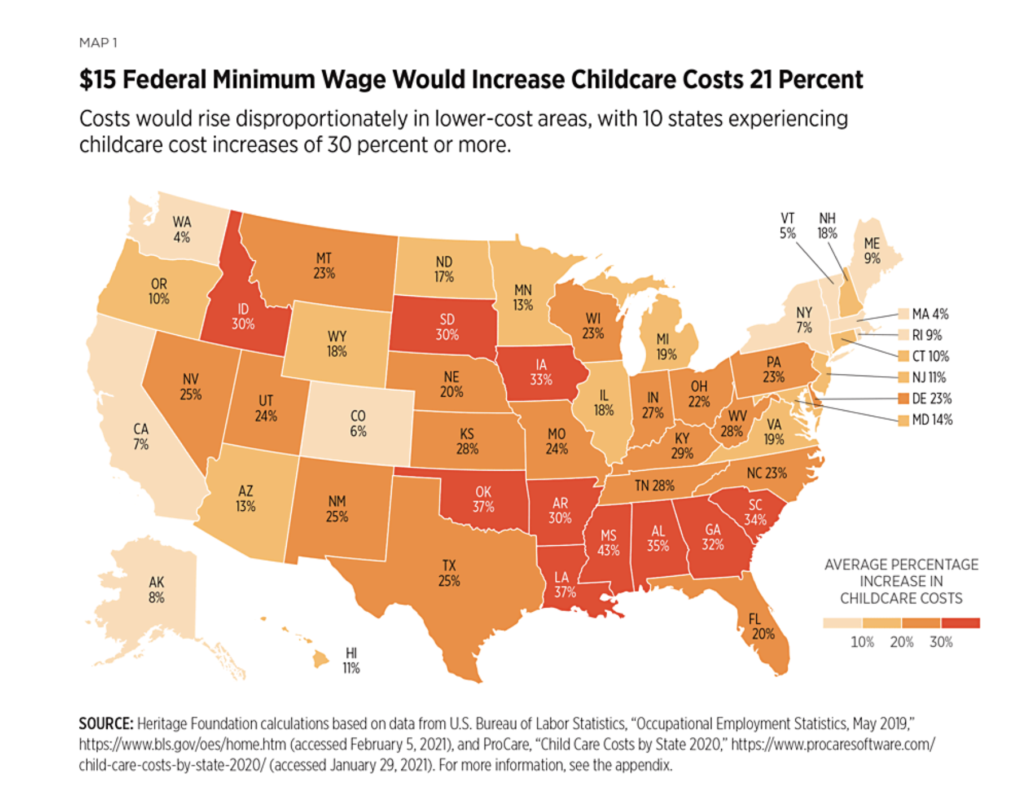
Parents will pay thousands more
In dollar terms, a 13-percent rise in Minnesota child care costs translates to an increase of about $3,600. Compared to other states, Minnesota’s costs will go up by less than the national average — “$3,728 per year in child care costs for a family with two children.”
However, Minnesota is already one of the most expensive states for child care. Additionally, Minnesota has had one of the fastest growth rates in child care costs due to the pandemic.
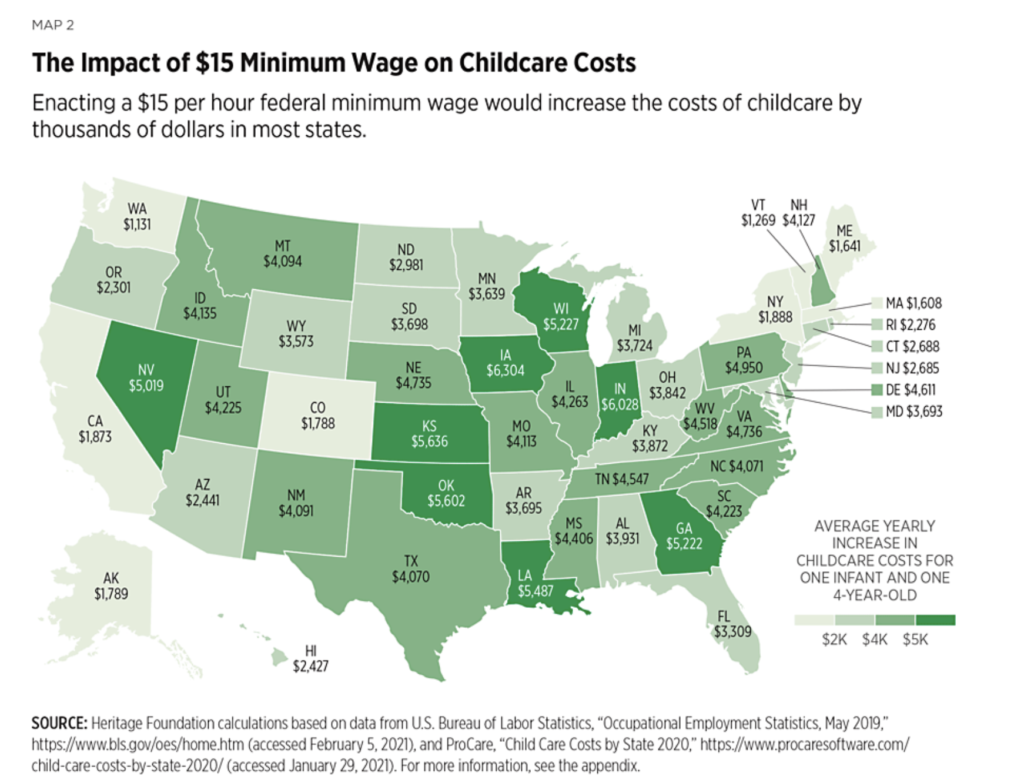
Minnesota’s high child care costs are one of the largest issues facing parents.
Raising child care prices further will likely only drive more families out of the child care market. Consequently, this
would force some parents to give up their jobs and live on lower household incomes, while causing others — particularly single parents — to turn to non-licensed, typically illegal, child care.”
All of this is harmful to the well-being and development of kids, as well as Minnesota’s economy.