COVID-19 pandemic cut life expectancy by 1 year during half of 2020
According to newly released data from the Centers for Disease Control and Prevention (CDC), U.S. life expectancy fell by a year between 2019 and 2020. In 2019, the average life expectancy was 78.8 and fell to 78.8 in 2020, its lowest level since 2006.
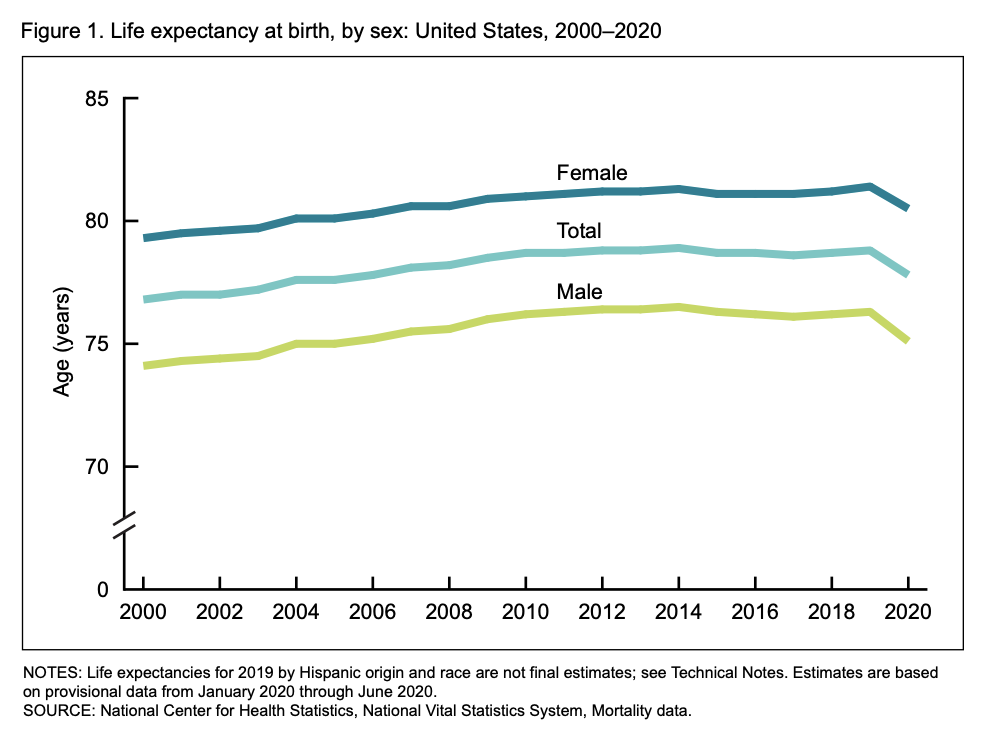
This is likely due to increased mortality during the pandemic. Increased mortality rates are associated with reduced life expectancy and vice versa.
Between 2014 and 2017, the U.S. saw a slight decrease in average life expectancy. This was mainly due to the increase in mortality from unintentional injuries, Alzheimer’s disease, and suicide. Life expectancy rose between 2017 and 2018, mainly due to the decline in mortality from cancer, unintentional injuries, and chronic lower respiratory diseases.
It, therefore, follows that life expectancy has declined between 2019 and 2020 due to excess deaths associated with the pandemic, including those from other causes, like drug overdoses. In 2020, we not only suffered excess mortality from COVID-19, but we also saw an increase in deaths stemming from some measures that states took. Restrictions on medical procedures increased mortality for cancer and other health issues. Lockdowns and worsening economic outcomes increased deaths of despair among individuals.
It is too early to know the full impact of COVID-19 on many aspects of our lives. However, this new data should raise concerns about the impact of COVID-19 and its associated restrictions on future health outcomes.