Policymakers need to rethink the war on tobacco
Minnesota lawmakers are on a mission to end a public health crisis — tobacco use. To accomplish this, Governor Walz has proposed a tax hike on cigarettes, which he later withdrew, as well as a tax hike on vaping products. In this legislative session, legislators introduced similar bills to raise taxes on tobacco products and ban flavored tobacco products, including e-cigarettes.
But are these proposals the magic bullet lawmakers claim they are? A new report by the Center of the American Experiment shows otherwise.
Tax hikes have little impact on tobacco use
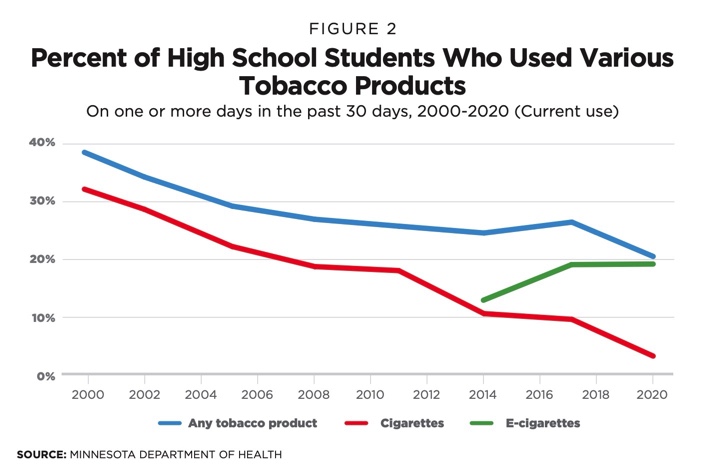
Smoking and tobacco use have been on a decline in Minnesota. Between 2000 and 2020, cigarette use declined by 90 percent among high school students and 78 percent among middle school students.
Even after accounting for e-cigarettes, reported use of tobacco products among the youth was significantly down in 2020. Tobacco use was 21 percent among high school students compared to 39 percent in 2000. Among middle school students, tobacco use was 4.1 percent compared to 12.6 percent in 2000. This is a nationwide trend.
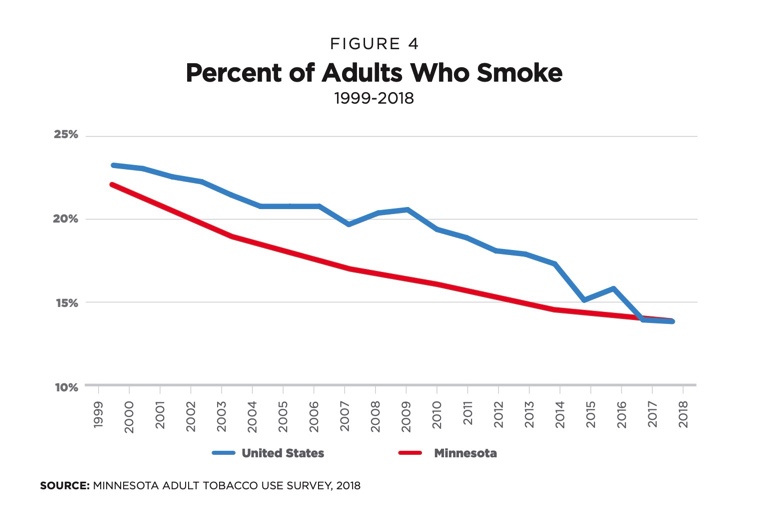
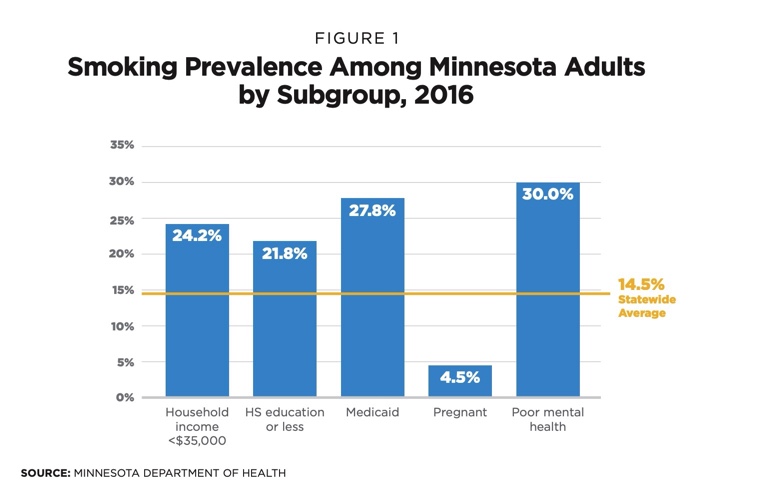
The data show that tax hikes have little, if any, impact on tobacco use. This is partly because regular and long-term tobacco use is a much more common demographic who are less likely to respond to tax hikes. People with mental health issues, for instance, smoke at twice the statewide rate.
High taxes = Increased Smuggling
While they have little to no impact on tobacco use, high taxes encourage smuggling, which hurts Minnesota businesses. According to the Tax Foundation, in 2018, Minnesota had the fifth-highest cigarette tax rate per pack in the country. In the same year, the state ranked fifth highest in cigarette smuggling. That is, 36 percent of cigarettes Minnesota were smuggled in from other (low-tax) states. Between 2006 and 2018, smuggling increased 52 percent. During the same period, excise taxes on tobacco grew 142 percent.
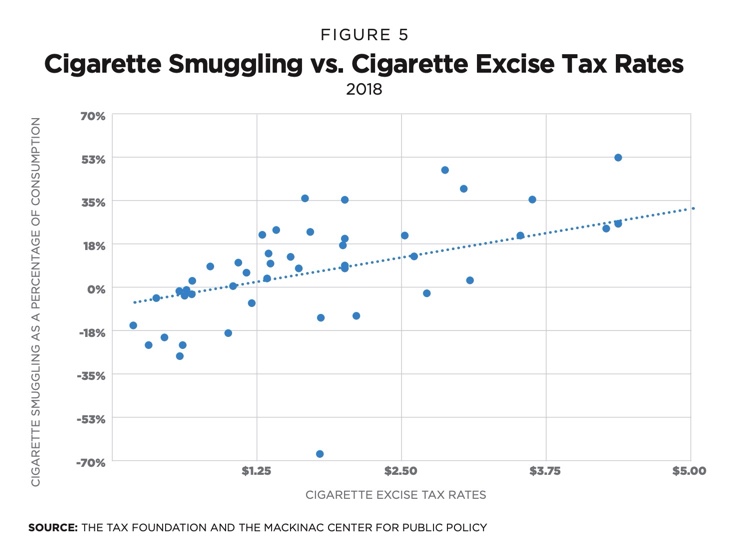
Currently, the total tax rate on cigarettes in Minnesota –– $3.673 –– is eight times higher than that of North Dakota –– $0.44. A tax hike would push more Minnesotans into buying cigarettes from North Dakota or our other low-tax states. A similar thing happened in 2013 when Minnesota raised the cigarette excise tax. Border communities saw a significant decline in cigarette sales as well as a loss of sales in non-tobacco products that accompany tobacco products.
Tobacco taxes fall hardest on the poor
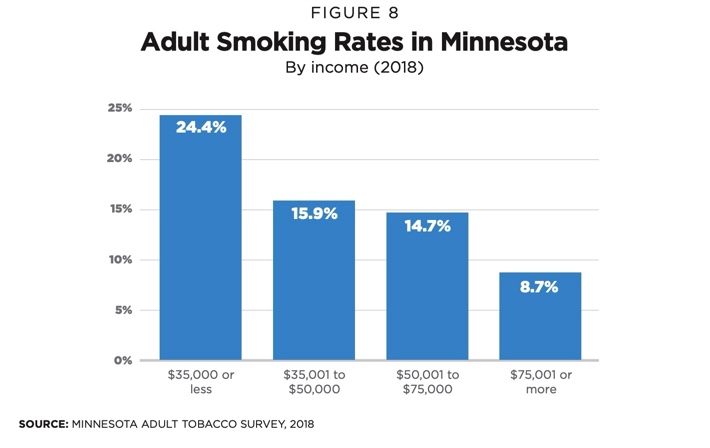
Notwithstanding, tobacco taxes also hurt the poor since they spend a disproportionate share of their income on tobacco products and have higher rates of tobacco use. In 2018, 24 percent of Minnesotans with incomes less than $35,000 smoked compared to 9 percent with incomes above $75,000. In 2019, half of all smokers made $24,999 or less.
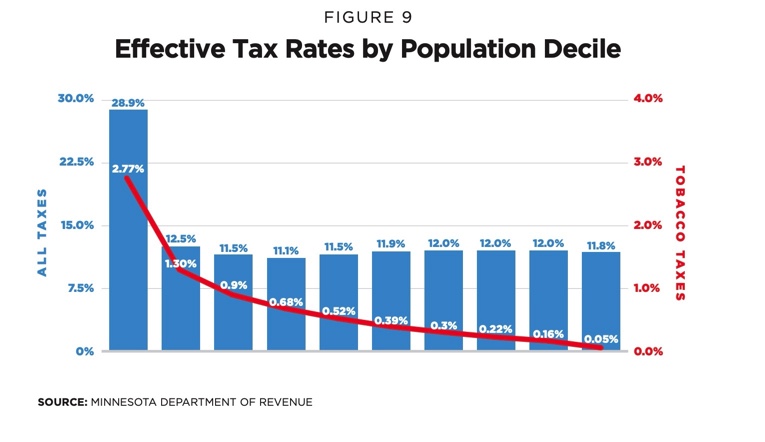
According to the 2021 Tax Incidence tax study, in 2018, the effective tax rate on tobacco products for 10 percent of Minnesotans with the lowest incomes was 2.77 percent compared to 0.05 percent paid by the 10 percent with the highest incomes. Policymakers risk further burdening low-income individuals by raising taxes on tobacco.
Vaping restrictions increase cigarette use
If the goal is to indeed protect public health, lawmakers need to rethink policies that merely burden smokers with high taxes —of which the majority of revenue goes toward the general fund and not smoking prevention or cessation programs — and harm businesses but have no discernible effect on tobacco use.
Research has found that e-cigarettes and other vaping products are up to 95 percent less harmful than cigarettes. They also help smokers quit using cigarettes. Improving access to these products could be a better alternative to reduce smoking-related diseases and death caused by toxins in harmful tobacco products.
Generally, regular e-cigarette use among the youth is rare but heavily coincides with reduced cigarette smoking. Policies that restrict access to these products –– like the ones proposed –– are counterproductive and will harm public health by pushing more people, particularly the youth, into smoking more cigarettes.