Consumers are misinformed about the risk of vaping and that is harmful to public health
Smoking rates have gone down precipitously since the introduction of e-cigarettes and vaping products. It is true, smoking rates were going down even before e-cigarettes. However, a lot of evidence has credited e-cigarettes with the increased reduction in smoking, both among the youth and adults.
This promising trend came to a halt in 2020, however, as people sought to quit smoking. smoking. The perception that e-cigarettes are harmful has been growing. This is discouraging people from switching to e-cigarettes and other vaping products.
As our report previously explained:
Generally, regular use of e-cigarettes among youths is rare but usually coincides with reduced cigarette smoking. A 2017 CDC study found that an increase in the use of e-cigarettes and hookahs was associated with a decline in cigarette use among U.S. middle school and high school students.
Such a relationship has also been found in adults who take up e-cigarettes as a substitute for traditional cigarettes or as a way to quit smoking. Tobacco products, e-cigarettes included, are all what economists call substitutes. Much like cigarettes, they deliver nicotine to consumers. But since they are not combustible, they are safer than traditional cigarettes.
Research has generally found that e-cigarettes do not produce toxins. This reduces the risk of cardiovascular and other respiratory diseases associated with smoking. This makes them a potential solution to reducing smoking-related deaths, if only the messaging could make it clear that e-cigarettes are safer.
In 2019, the CDC put out a recommendation discouraging vaping, even after a study found that lung illnesses associated with e-cigarettes were largely due to THC-laced products flooding the market. States have also run numerous campaigns against vaping products, raised excise taxes, and even prohibited the sale of such products. It is not surprising that people overestimate the risk associated with vaping, especially relative to the risk of smoking
In Minnesota, for example,
In 2020, only 18.2 percent of Minnesota youths said they considered e-cigarettes to be less harmful than regular cigarettes, down from 35.2 percent of respondents in 2017.
Nationally, 65 percent of adults considered e-cigarettes to be very harmful, up from 58 percent in 2019. Similarly, the number of adults who consider e-cigarettes to be equally or more harmful compared to cigarettes has been on the rise.
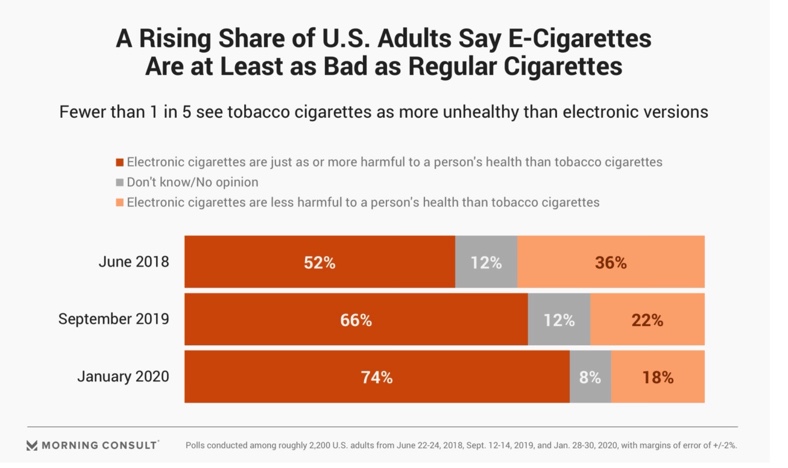
This should be concerning for public health. If consumers perceive e-cigarettes to be more harmful than traditional cigarettes, they are less likely to make the switch to e-cigarettes. Likewise, policies intended to restrict vaping either through prohibition or tax hikes discourage people from switching to e-cigarettes. In fact, these policies have fostered an increased use of cigarettes.
State bans on e-cigarettes, in particular, have been found to increase conventional cigarette use among 12 to 17-year-olds, effectively slowing the rate of decline in cigarette smoking among teenagers.
Fostering the perception that vaping is equally as harmful or even more harmful than traditional cigarettes is counterproductive if the goal is to protect public health.