Why it is counterproductive to demonize electronic cigarettes
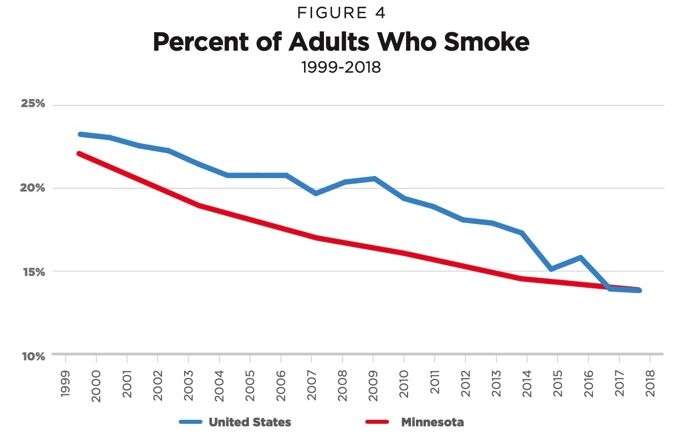
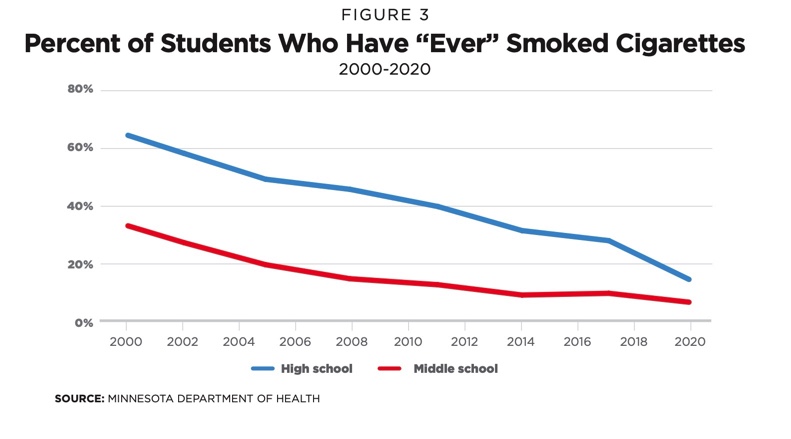
In 1999, 23 percent of adults in Minnesota reported smoking a cigarette. By 2018, that number was down to just 14 percent. Similarly, in 2000, 32 percent of Minnesota high school students reported smoking a cigarette. By 2020, the number had fallen to 3.2 percent. The number of teenagers reporting “ever” smoking cigarettes has also been going down, showing that fewer and fewer Minnesota youth are taking up smoking.
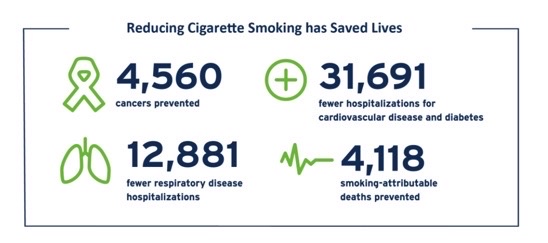
This is worth applauding. As a study from the Minnesota Department of Health (MDH) shows, a reduction in smoking benefits public health by reducing smoking-related deaths and diseases.
E-cigarettes have contributed to less smoking
For the most part, increased awareness about the dangers of cigarettes has been a major contributing factor to declining smoking rates. The surgeon general’s report, for example, started a successful anti-smoking campaign that continues to save lives to this day.
In addition to these anti-smoking campaigns, research evidence also shows that the introduction of cigarette substitutes like e-cigarettes and other vaping products has pushed some smokers to switch or quit using nicotine entirely. This trend has been especially pronounced among the youth.
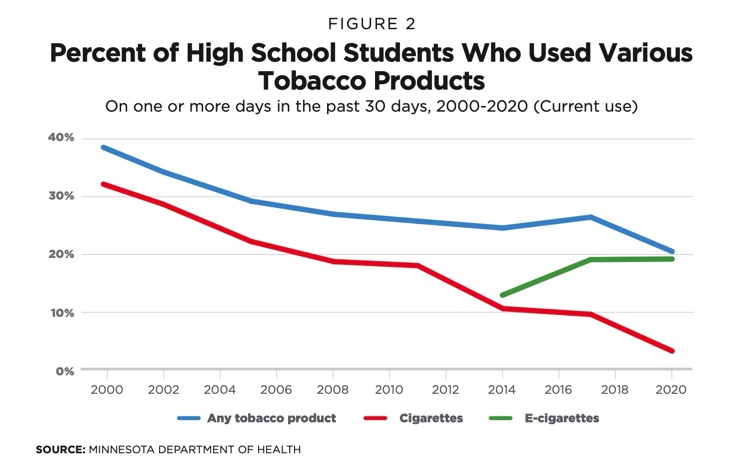
Data from the Minnesota Department of Health, for instance, show that even after accounting for increased e-cigarette use, total tobacco use was significantly lower in 2020 compared to 2000. This was mainly due to a notable decline in smoking.
Why demonizing e-cigarettes could increase smoking
MDH has called vaping among the youth an epidemic. In the last legislative session, lawmakers also presented numerous proposals to reduce vaping among the youth. At the local levels, efforts are also underway to criminalize vaping. Bloomington, for instance, voted to ban the sale of flavored tobacco products, including e-cigarettes, starting next year.
But while there are possible risks to consuming e-cigarettes, research has shown that those risks are significantly lower compared to those incurred when smoking. E-cigarettes are, therefore, a safer alternative to smoking. Efforts to ban them will likely only push people toward traditional cigarettes.
Smoking remains a public health concern, but to a lesser extent compared to the past. This is partly thanks to safer alternatives such as vaping. For an effective anti-smoking policy, lawmakers need to demonize e-cigarettes and recognize them for the life-saving tool they could potentially be.