Minnesota’s high level of public welfare spending is not due to a higher than average elderly population
In 2010, Minnesota spent $20,000 on public welfare per person in poverty. The national average amount, however, was $11,000. In 2018, Minnesota spent $30,000 per person, while the national average was $17,000.
Some have justified the state’s high level of welfare spending to its elderly population. The argument is that since welfare spending mostly constitutes expensive health care programs like Medicaid, states with large populations of the elderly will tend to spend more, as services for that group tend to be expensive.
Certainly, the majority of welfare spending indeed goes to health care programs like Medicaid. And most Medicaid spending is indeed consumed by the elderly and disabled. According to the Minnesota Department of Human Services, in 2019, Minnesota spent $13 billion on Medicaid. The elderly and disabled accounted for $8 billion or more than half.
But this is true for most states. When we adjust Medicaid expenditure per elderly or disabled person, Minnesota still spends significantly more.
Minnesota spends more per person aged 65 and older
Looking at the data, in 2018, people aged 65 and older made up 16% of Minnesota’s population. This is about the same as the national average.
Controlling for the elderly population, in 2010, Minnesota ranked fourth among the 50 states on welfare spending per person aged 65 and older. In 2018, Minnesota ranked fifth-highest, spending $18,093 on welfare per person aged 65 and older. This is $4,384.07 (or 31.98 percent) more than the national average — $13,710.
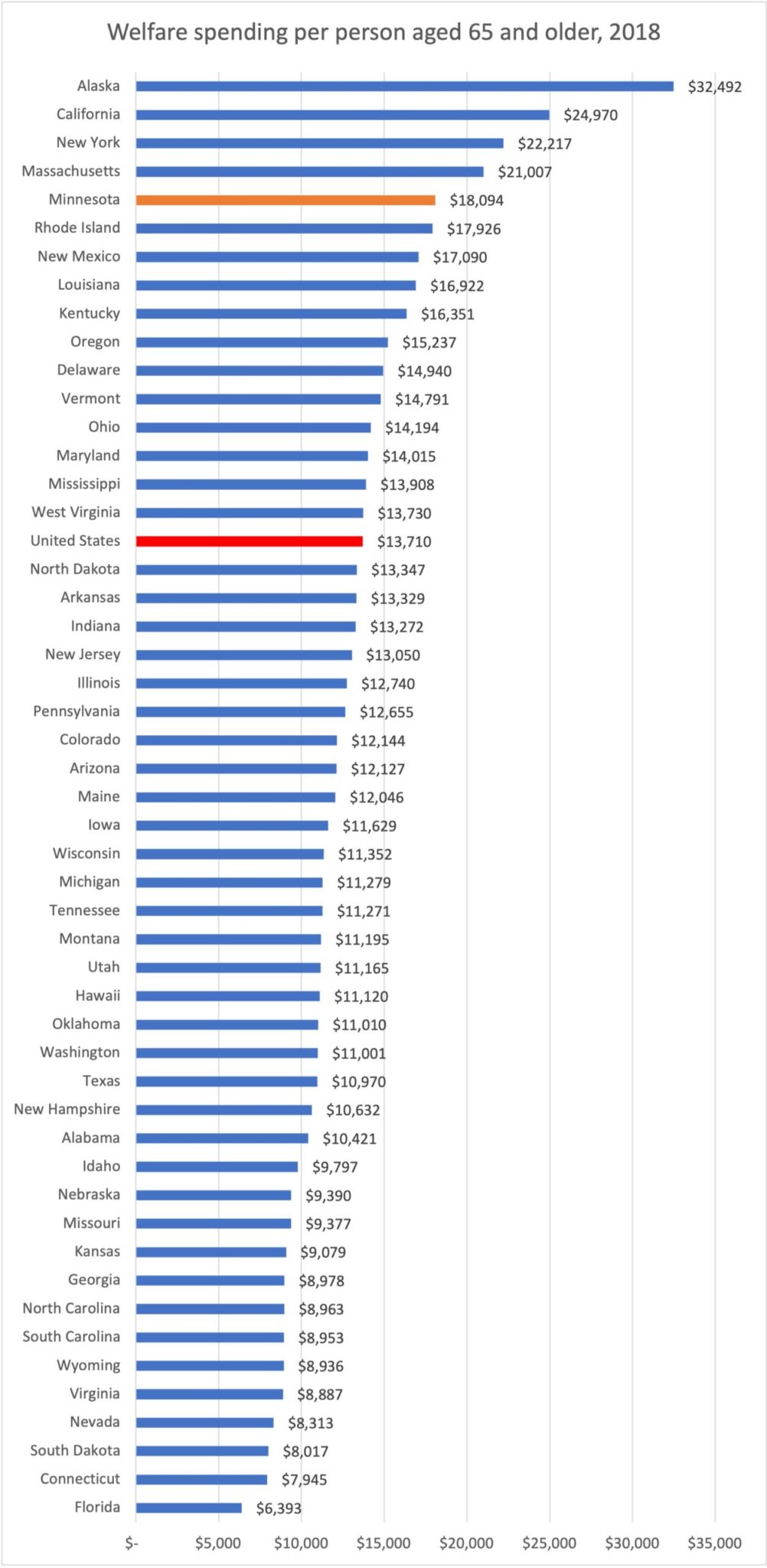
Source: US Census Bureau
Medicaid payments for the elderly are higher than those of other states
Admittedly, not every elderly person is on Medicaid, and not all spending on Medicaid goes to the elderly. So it is also helpful to specifically analyze Medicaid spending on older people. Here, the trend is the same.
In 2010, Minnesota had the fifth-highest level of Medicaid payments per enrollee who was either disabled or aged 65 and older.

Source: Pew Trusts
Is Minnesota just more expensive?
Furthermore, we cannot blame our high level of spending on differences in the cost of living. According to the Tax Foundation analysis of prices, $100 will buy a person $102 worth of goods in Minnesota, meaning Minnesota has a slightly lower cost of living compared to the national average.
Out of all the top 5 states that spent the most on welfare per person aged 65 and older, Minnesota is the only one that is more affordable compared to the national average. California, Massachusetts, New York, and Alaska all have prices higher than the national average.

Source: Tax Foundation
As can be seen, Minnesota’s higher-than-average welfare spending is not due to the elderly population. The state government likely wishes to be generous with taxpayers’ money.