New BLS survey data shows low-wage jobs were the most heavily affected by the pandemic
Earlier today, the Bureau of Labor Statistics (BLS) published the results of their survey on how businesses responded to COVID-19. The survey, which constituted seven questions, was conducted between July and September 2020 and covered 150,000 establishments.
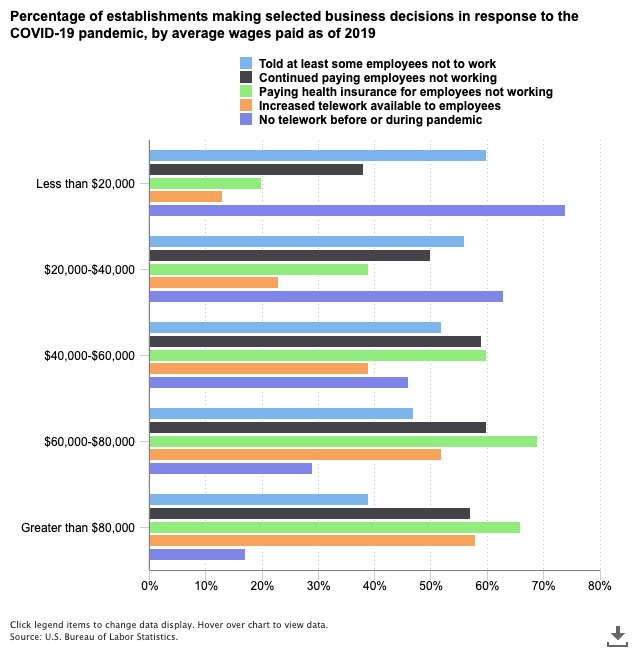
The results reveal what we already know; low-income employees have been the most heavily affected during the COVID-19 crisis.
According to BLS
Many U.S. businesses have changed their operations and employment because of the COVID-19 pandemic. Since January 1, 2020, 60 percent of establishments in which workers were paid an average annual wage of less than $20,000 in 2019 told at least some employees not to work. This compared with 17 percent of establishments paying an average wage greater than $80,000. Among establishments that told at least some employees not to work, 57 percent of those paying greater than $80,000 continued paying at least some workers that they told not to work. This compared with 38 percent for establishments in which workers were paid an average wage less than $20,000.
Additionally,
Establishments in which workers were paid more than $80,000, on average, were more than three times as likely as those paying less than $20,000 to have paid health insurance premiums for employees told not to work. Establishments paying more than $80,000 were more than four times as likely as those paying less than $20,000 to report increasing telework opportunities for workers. Telework was not available before or during the pandemic in 74 percent of establishments that paid workers less than $20,000, on average. This compared with 17 percent of establishments in which workers were paid more than $80,000.
Low-income jobs are heavily concentrated in the service sector
There is a combination of factors that contributed to this discrepancy. The service industry, which was heavily hit by lockdown orders, for instance, is concentrated with low-paying jobs, and additionally relies heavily on in-person business, reducing the opportunity for telework.
Businesses with low-paying jobs also likely had little financial cushion to cover their payroll expenses due to reduced business from the pandemic.
All in all, the data proves a trend that has been seen throughout the pandemic: the economic fallout due to the lockdown orders has been borne mainly by low-income workers. That should be concerning.