How the Democrats tax proposal affects Minnesota
On Monday, Sept. 13, House Democrats released a tax proposal that is intended to pay for their $3.5 trillion spending plan. Among other things, the plan raises the U.S. corporate tax from 21 percent to 26.5 percent.
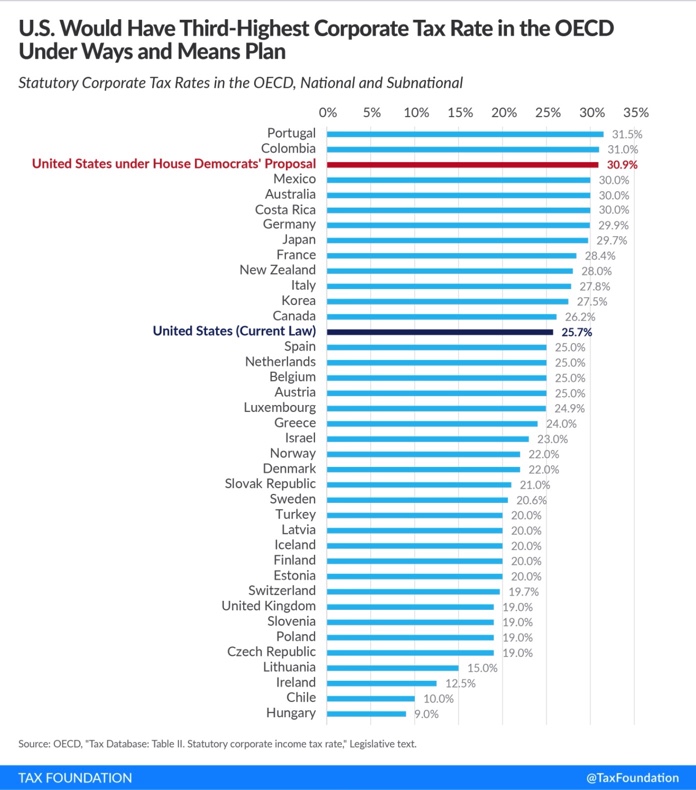
According to the Tax Foundation, after accounting for state taxes, the U.S. average corporate tax rate would reach 30.9 percent — the third-highest corporate income tax rate among OECD nations.
The plan would also raise the capital gains tax to 25 percent and add a surcharge of 3 percentage points on all income above $5 million. According to the Tax Foundation,
When including the net investment income tax of 3.8 percent under current law, the top marginal capital gains tax rate would reach 31.8 percent at the federal level.
That would be the highest federal tax rate on capital gains since the 1970s — and it would be above the generally estimated revenue-maximizing rate of 28 percent. The proposal should also be considered in the context of state-level capital gains taxes, which most states levy.
How the plan affects Minnesota
Minnesota already has some of the highest income taxes in the country. So, this new proposal will be adding to an already burdensome tax environment for Minnesota businesses.
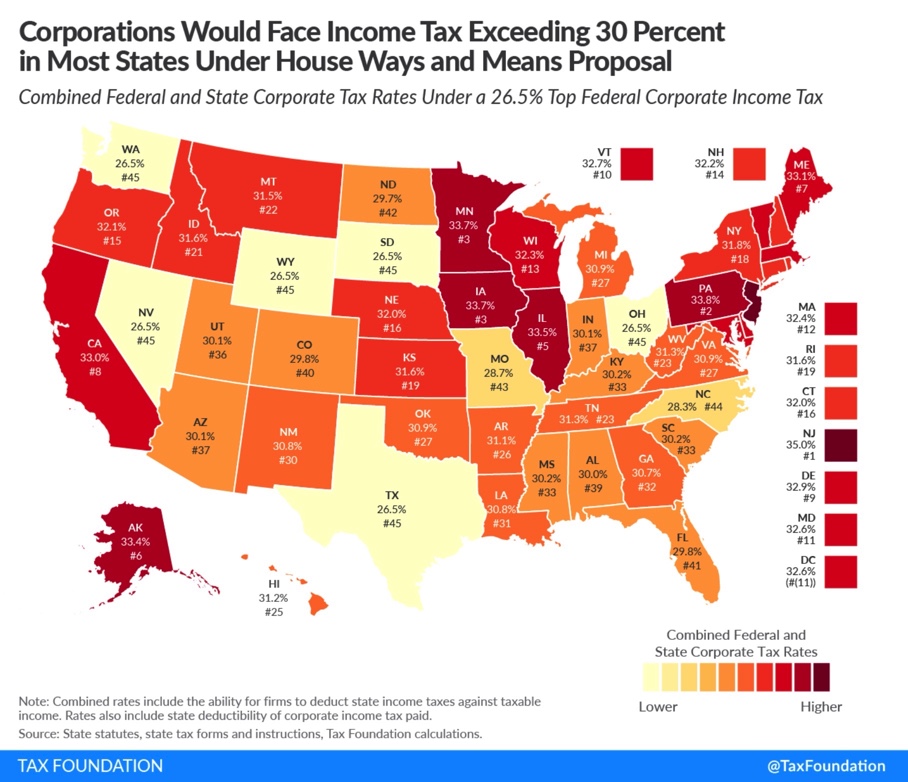
According to the Tax Foundation, businesses will pay an average of 33.7 percent in corporate taxes in Minnesota — the third-highest rate in the nation. Minnesota’s rate would be higher than the OECD’s highest rate of 31.5 percent.
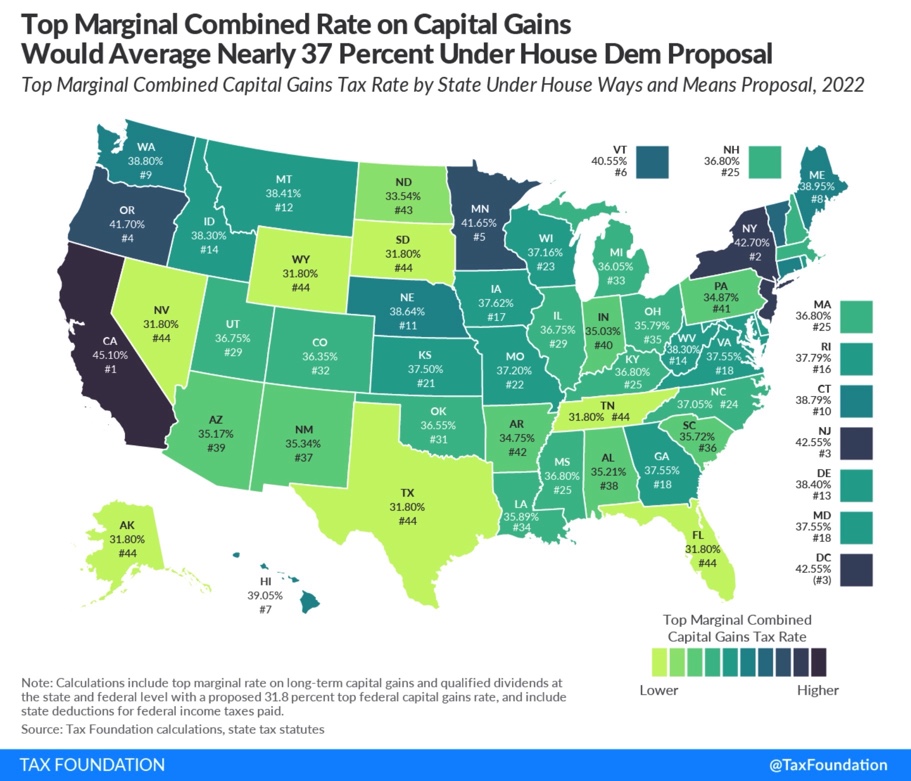
On capital gains, Minnesota will have the fifth-highest tax rate in the nation at 41.65 percent. This is slightly similar to the OECD’s highest of 42 percent levied by Denmark.
American Experiment’s Economy report showed that Minnesota’s economic growth has lagged behind other states. High taxes are a significant contributor to this trend. If this tax proposal moves forward, this trend will likely worsen.